Why Heat Rejection Matters When Choosing Automotive Window Tint
 Robert Trejo
When choosing automotive window tint, most people first think about how dark they want their windows to look.
But one of the biggest differences between window films comes down to performance.
Heat rejection can have a major impact on interior comfort, especially for vehicles that spend a lot of time in direct sunlight.
Higher-performance films are designed to reduce more of the solar energy entering through the glass, helping create a cooler and more comfortable driving environment.
What Does Heat Rejection Mean?
Heat rejection refers to a window film’s ability to reduce the solar energy passing through vehicle glass.
Without window film, sunlight can quickly increase interior temperatures and heat up seats, dashboards, steering wheels, and other surfaces inside the vehicle.
A film designed for stronger heat rejection helps limit the amount of that energy entering the cabin.
This can make a noticeable difference during daily driving, especially in warmer climates.
Understanding Infrared Rejection
Infrared energy is part of the solar spectrum and contributes to the heat you feel from sunlight.
Higher-performance window films are engineered to reject more infrared energy before it enters the vehicle.
This is where advanced ceramic films can offer a major performance advantage over more basic window film options.
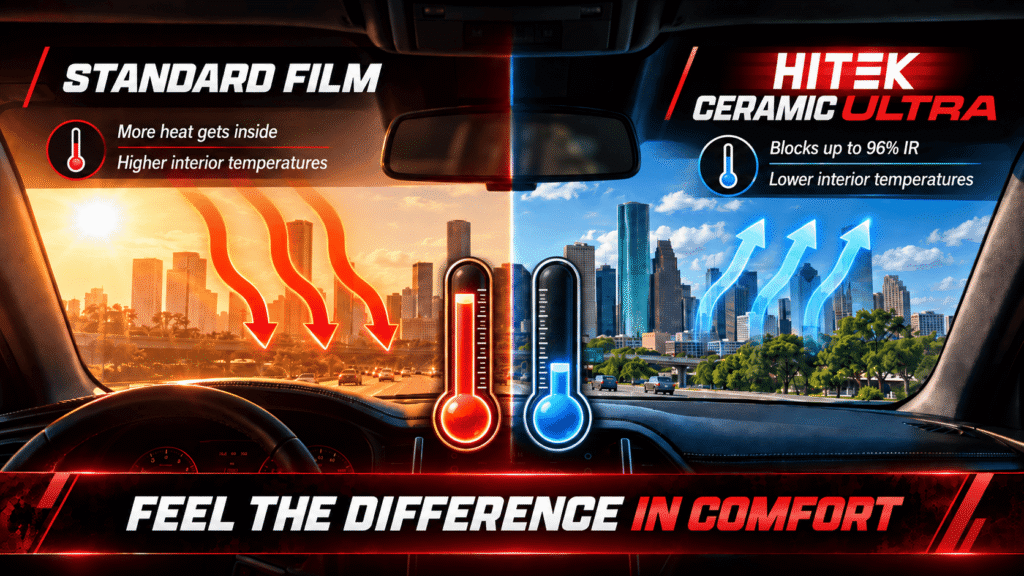
HITEK Ceramic Ultra is engineered to provide up to 96% infrared rejection, helping reduce heat while maintaining clear visibility through the glass.
Darker Tint Does Not Always Mean Better Heat Rejection
One of the biggest misconceptions about window tint is that darker film automatically means better heat protection.
That is not always true.
Visible Light Transmission, or VLT, measures how much visible light passes through the film. A lower percentage creates a darker appearance.
Heat rejection measures something different.
Because of this, a lighter high-performance ceramic film can provide stronger heat rejection than a darker film using more basic technology.
That is why installers and customers should look beyond shade when comparing window film.
Why Ceramic Window Film Performs Differently
Ceramic window film uses advanced ceramic technology to manage solar energy without relying on metallic construction.
This allows the film to provide strong heat rejection while maintaining optical clarity.
It also gives customers more flexibility when choosing a shade.
Someone who wants a lighter appearance does not necessarily have to sacrifice heat rejection just because they do not want extremely dark windows.
HITEK Ceramic Ultra
HITEK Ceramic Ultra is HITEK’s premium nano-ceramic automotive window film.
It is designed for customers looking for a higher level of heat rejection, UV protection, clarity, and overall performance.
Ceramic Ultra provides:
Up to 96% infrared rejection
99% UV protection
Strong solar heat rejection
Premium optical clarity
Non-metal construction
Multiple available shades
These features make Ceramic Ultra a strong option for drivers who want better interior comfort without choosing window film based only on darkness.
Choosing the Right Window Film
The right window film depends on more than appearance.
When comparing options, consider heat rejection, UV protection, visibility, film technology, shade, and overall performance.
Understanding those differences makes it easier to choose a film that fits both the look and performance you want from your vehicle.
Experience Ceramic Ultra
HITEK Ceramic Ultra combines advanced ceramic technology with high heat rejection, UV protection, and clear visibility.
Explore Ceramic Ultra to learn more about its performance and available shade options.