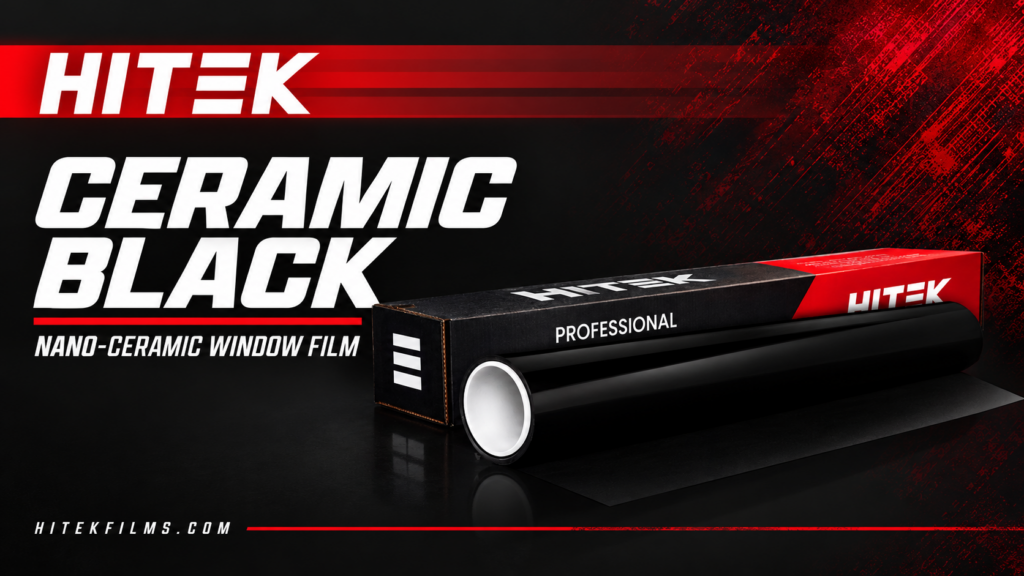
HITEK Ceramic Black: Deep Black Style with Nano-Ceramic Performance
 Robert Trejo
A deep black finish can bring a vehicle’s appearance together. When choosing automotive window tint, the technology behind that finish also deserves a closer look.
HITEK Ceramic Black combines a dyed base with nano-ceramic particles, pairing a color-stable black tone with infrared rejection in a metal-free film. Its construction gives drivers several details to consider alongside the shade they want: appearance, solar performance, durability, and how the film fits their everyday driving needs.
A Deep, Color-Stable Black Appearance
Ceramic Black’s dyed base gives the film its rich black appearance. Its color-stable formulation is designed to resist fading and purple discoloration over time.
The final appearance also depends on the vehicle. Existing glass, interior colors, viewing angle, and lighting all influence how dark the windows appear. A sample viewed against the actual glass gives a more useful impression than a shade percentage on a screen.
Look at the sample from inside and outside the vehicle. That makes it easier to discuss the exterior finish and the view through the glass together.
Dyed and Nano-Ceramic Technology
Ceramic Black brings two technologies into the same film. The dyed base establishes the black tone, while nano-ceramic particles contribute to infrared rejection.
That combination gives appearance and performance separate roles in the selection process. The shade helps establish the look. The published performance information helps explain how a particular option manages solar energy.
When reviewing the film, consider both. Choosing by darkness alone leaves out useful information, while choosing by one performance percentage can overlook the appearance and visibility a driver expects from the finished installation.
Infrared Rejection with the Measurement Included
HITEK lists 78% infrared rejection at 5% VLT, measured at 1025 nm, for Ceramic Black.
The shade and measurement wavelength belong with that figure. It describes the stated infrared measurement and should not be applied to every shade. It also does not mean the film rejects 78% of all solar energy.
Three terms help make the specification sheet easier to read:
- VLT: Visible light transmission, which describes how much visible light passes through.
- IR rejection: Infrared rejection, which needs to be read alongside the stated wavelength or test range.
- TSER: Total solar energy rejected, a separate measurement from IR rejection.
When comparing films, use the same metric under comparable test conditions. This gives a percentage meaningful context and helps avoid treating different measurements as equivalent.
Metal-Free Construction
Ceramic Black delivers its appearance and ceramic performance without a metallic layer.
That construction is relevant to vehicles equipped with navigation, mobile devices, radio systems, and embedded antennas. HITEK identifies Ceramic Black as a non-metallic option designed to avoid the signal-interference concerns associated with metallic films.
Film construction is another useful detail to discuss when selecting tint for a vehicle that relies on connected features throughout the day.
Built for Everyday Driving
Ceramic Black uses a 2-ply, 2 mil weatherable polyester construction with a scratch-resistant coating and pressure-sensitive adhesive.
Each element has a place in the product’s construction. The film provides the foundation, the surface coating adds scratch resistance, and the adhesive bonds the film to the glass.
Key construction details include:
- Dyed base with nano-ceramic particle infusion
- 2-ply, 2 mil film construction
- Scratch-resistant surface coating
- Pressure-sensitive adhesive
Scratch resistance should be understood as a material feature rather than a promise that the surface cannot be damaged. Careful installation and appropriate cleaning remain part of maintaining the finished film.
Shade Options for Different Looks
Shade selection helps shape the final appearance. A lower VLT allows less visible light through, creating a darker look.
The vehicle’s existing glass contributes to the completed result, so a film’s shade label is one part of the choice. Factory-tinted rear glass and lighter front glass can produce different appearances even when the same film is considered for both areas.
Think about where and when the vehicle is driven, the driver’s visibility needs, and the appearance they prefer. Discuss those priorities with the installer before choosing a shade.
Review the current specifications for the exact option being considered and confirm applicable requirements for each window location. A sample and a clear explanation of the measurements make that conversation more useful.
Caring for the Finished Installation
Once the film is installed, follow the installer’s guidance on curing, window use, and cleaning. Ask which cleaning products and materials are appropriate for the film before beginning regular maintenance.
If something about the finish raises a question, contact the installer before trying to correct it yourself. Having the product and installation details available helps keep that conversation specific to the film on the vehicle.
Explore HITEK Ceramic Black
Ceramic Black brings a deep black tone, nano-ceramic technology, and metal-free construction into one automotive window film.
Understanding its appearance, construction, and shade-specific performance gives drivers a clearer basis for choosing their tint. Explore HITEK Ceramic Black to review current shades, roll options, and product details for your next installation.