How to Choose the Right Window Tint Shade for Your Vehicle
 Robert Trejo
Choosing the right window tint shade comes down to more than how dark you want your vehicle to look.
Different shades can change visibility, appearance, privacy, and how much visible light enters the vehicle.
Understanding the differences between tint percentages can make it easier to choose a shade that fits your vehicle and your preferences.
What Do Window Tint Percentages Mean?
Window tint percentages refer to Visible Light Transmission, commonly called VLT.
VLT measures how much visible light passes through the film and glass.
A lower percentage means less visible light passes through, creating a darker appearance.
A higher percentage allows more visible light through, creating a lighter appearance.
For example, 5% tint is much darker than 70% tint.
5% Window Tint
5% is one of the darkest automotive tint shades available.
It creates a very dark appearance and allows only a small amount of visible light through the glass.
This shade is typically chosen by drivers who want a bold look and increased privacy.
Because of how dark it is, visibility and local tint laws should be considered before choosing 5% film.
15% and 20% Window Tint
15% and 20% tint provide a dark appearance without being as extreme as 5%.
These shades are popular for drivers who want noticeable tint while still maintaining more visibility than the darkest options.
They can create a clean, uniform appearance across side and rear windows.
30% and 35% Window Tint
30% and 35% tint offer a more balanced appearance.
These shades provide noticeable tint while allowing more visible light into the vehicle.
They are often a good choice for drivers who want a darker look without making the glass appear extremely dark.
50% Window Tint
50% tint creates a lighter appearance while still adding the benefits of automotive window film.
This shade is a good option for drivers who want a more subtle look or prefer to maintain higher visibility through the glass.
With a high-performance ceramic film, choosing a lighter shade does not necessarily mean giving up heat rejection or UV protection.
70% Window Tint
70% tint is very light and allows most visible light to pass through the glass.
It is often chosen when drivers want the performance benefits of window film while keeping the appearance close to factory glass.
Lighter shades can be especially useful for windshields or vehicles where maintaining maximum visibility is a priority, depending on local regulations.
Shade and Performance Are Different
One of the most important things to understand when choosing window tint is that darkness and performance are not the same thing.
A darker film does not automatically provide better heat rejection or UV protection.
Film technology plays a major role in how well the tint performs.
Premium ceramic films can provide strong heat rejection and UV protection across multiple shade levels.
This gives drivers more freedom to choose a shade based on appearance and visibility instead of choosing the darkest option simply for performance.
HITEK Ceramic Ultra Shade Options
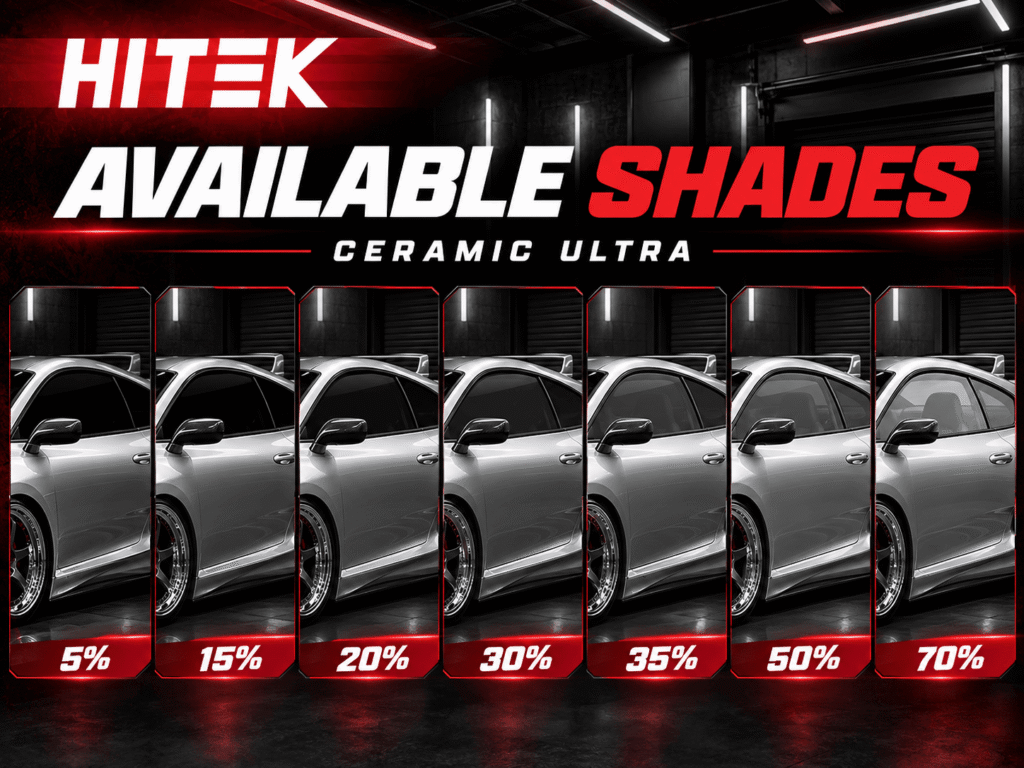
HITEK Ceramic Ultra is available in multiple shades, including:
5%
15%
20%
30%
35%
50%
70%
This range gives installers and customers flexibility when choosing the right balance of appearance, visibility, and performance.
Ceramic Ultra also provides up to 96% infrared rejection and 99% UV protection, helping improve interior comfort across the available shade range.
Choosing the Right Shade for Your Vehicle
The best window tint shade depends on your preferences, your vehicle, and local tint laws.
Before choosing a shade, consider:
How dark you want the vehicle to look
How much visibility you want from inside
Which windows you plan to tint
Your local automotive tint regulations
The heat rejection and UV protection offered by the film
Looking at all of these factors can help you choose a window tint that gives you the appearance and performance you want.
Find Your Ceramic Ultra Shade
HITEK Ceramic Ultra gives drivers multiple shade options while delivering premium ceramic performance.
Explore Ceramic Ultra to compare available shades and find the right option for your vehicle.